Stargazing Near Santiago, Chile: When to Go, What to See and How to Do It
18 November 2026 · 4 min read
Chile is one of the best countries in the world for looking at the sky: dry air, many clear nights and high mountains far from city lights. That is why it hosts a large share of the planet’s great telescopes. And although the most famous observatories are in the north, you do not need to travel to the desert for a night under the stars: about an hour from Santiago, in Cajón del Maipo, the sky gets dark enough to see the Milky Way with the naked eye.
This guide covers what you can see in the southern sky, the best time of year and how to make the most of a stargazing night from Santiago.
What you can see in the southern sky
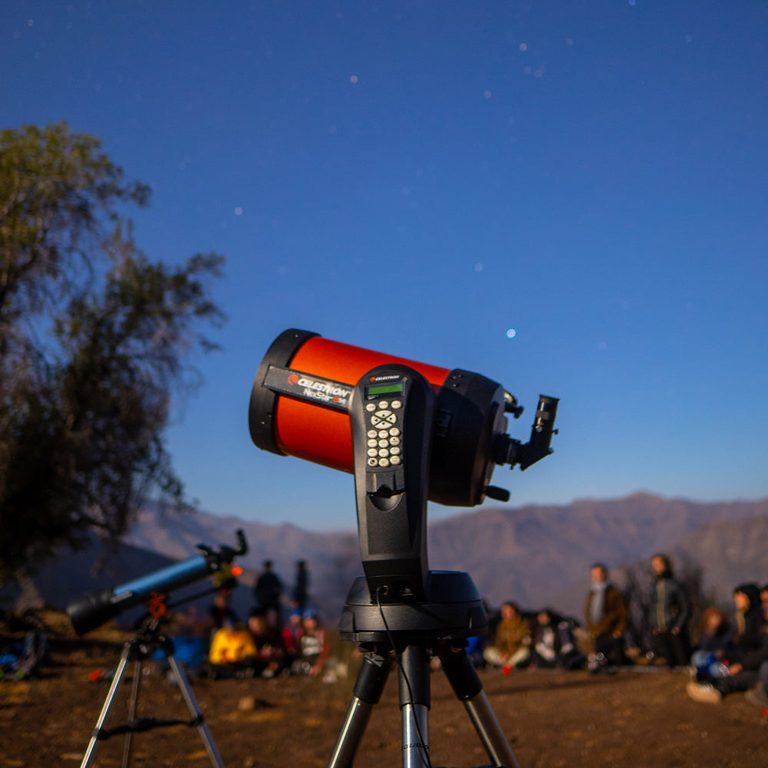
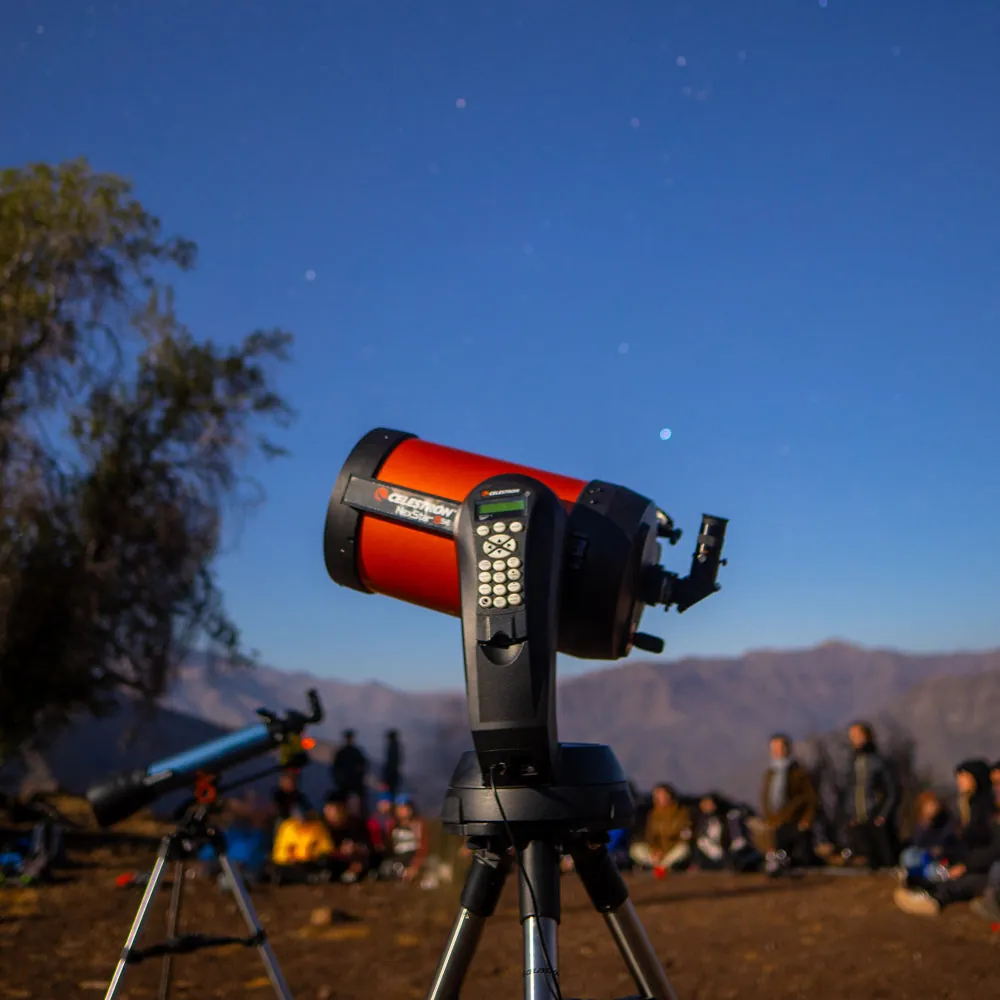 Telescopes ready as night falls, with the Andes behind.
- The Milky Way. From the southern hemisphere you see the centre of our galaxy, its brightest and densest part. In winter (June to August) it passes almost overhead.
- The Magellanic Clouds. Two neighbouring galaxies only visible from the south, like two patches of light beside the Milky Way. From Santiago they can be seen all year.
- The Southern Cross. The most famous constellation of the southern sky, which guided sailors for centuries.
- Planets, clusters and nebulae. Through a telescope you can see Saturn’s rings, Jupiter’s moons, star clusters and nebulae that are barely a dot to the naked eye.
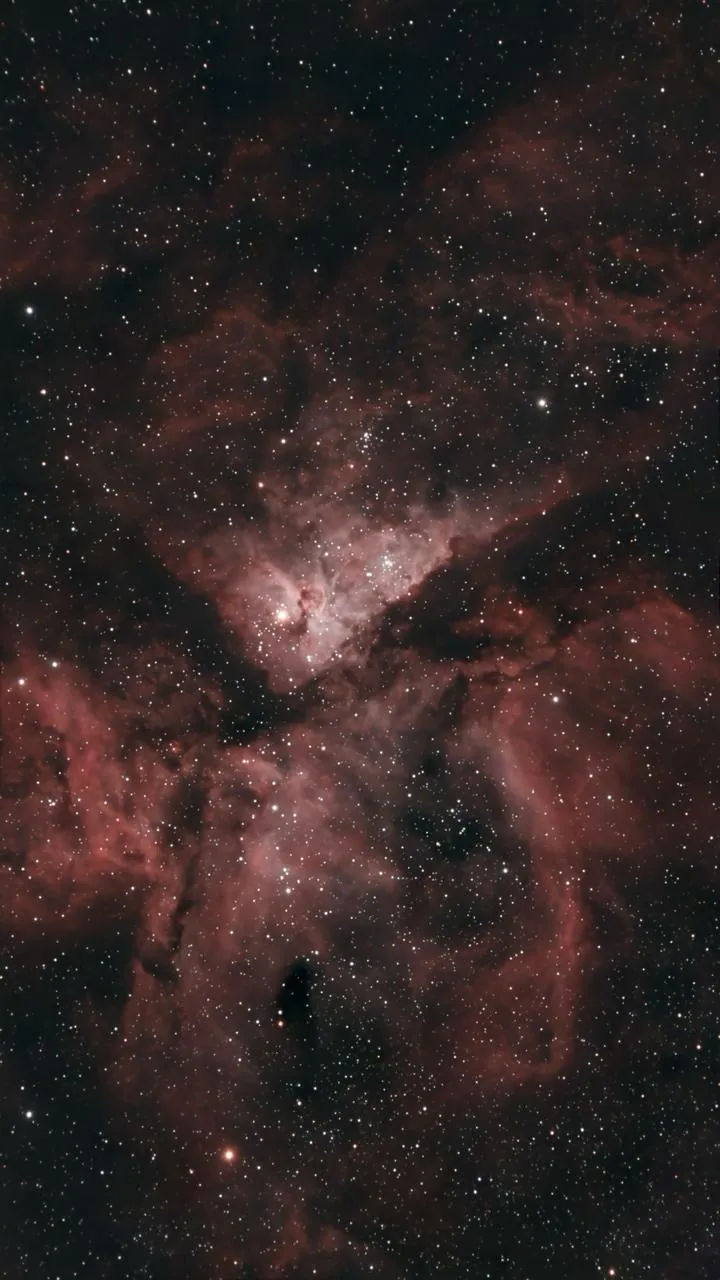 A nebula of the southern sky, photographed from the Andes.
When to go
- Choose nights near the new moon. A full moon brightens the sky and you see far fewer stars. An early crescent or late waning moon also works.
- Winter or summer, both have their charm. In winter the centre of the Milky Way rides higher and nights are long, but it is very cold and rain is more likely. In summer nights are mild, although it gets dark later.
- Check the forecast. Clouds are the only enemy. A good stargazing experience is rescheduled or refunded if the sky does not cooperate.
What to bring
- Warm clothes, even in summer. In the mountains the temperature drops fast at night: jacket, hat and gloves.
- Comfortable shoes for mountain ground.
- A torch or your phone light, ideally red so as not to dazzle others.
- Patience with your eyes: they take about 20 minutes to adapt to the dark. Avoid looking at a bright phone screen.
Photographing the stars
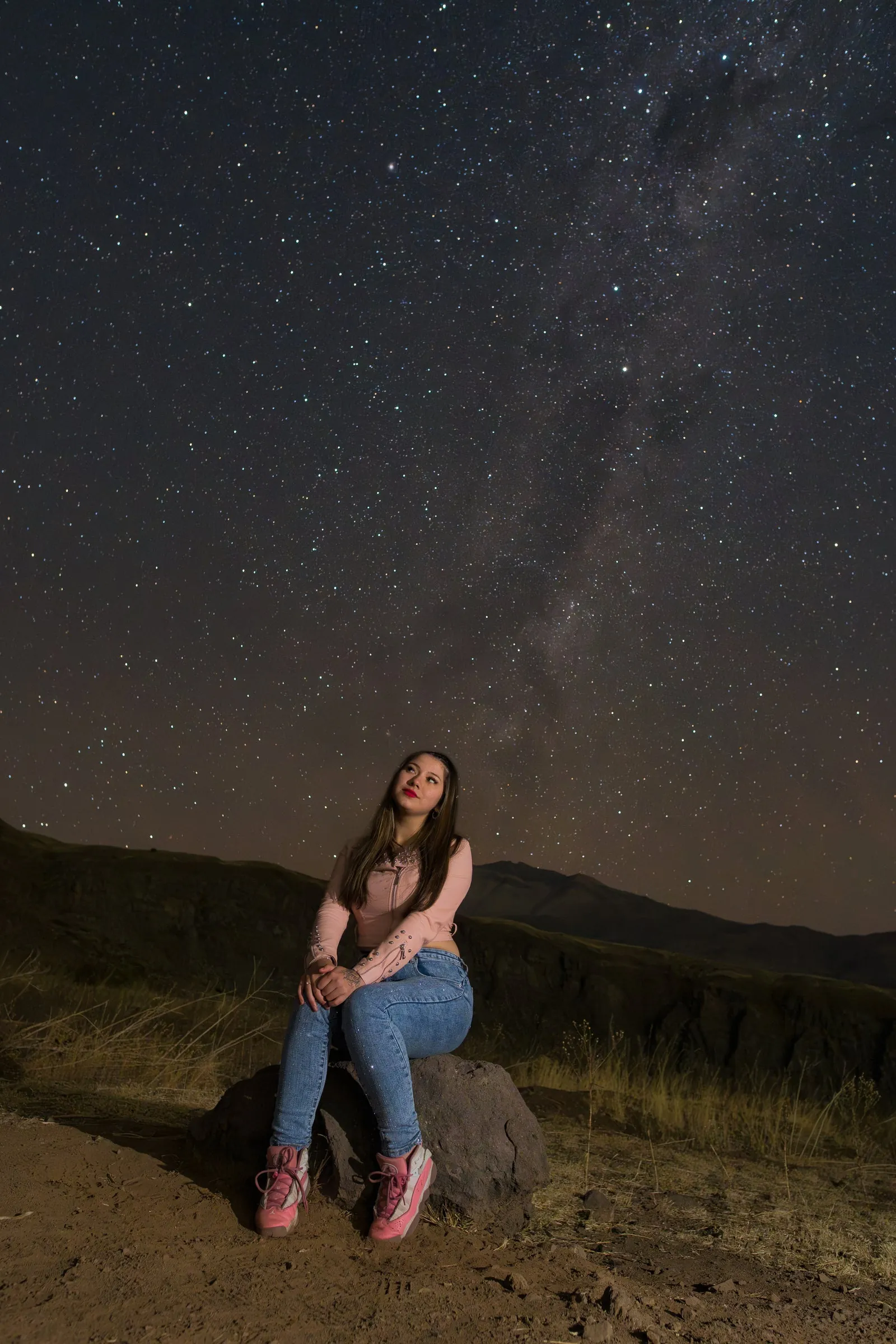
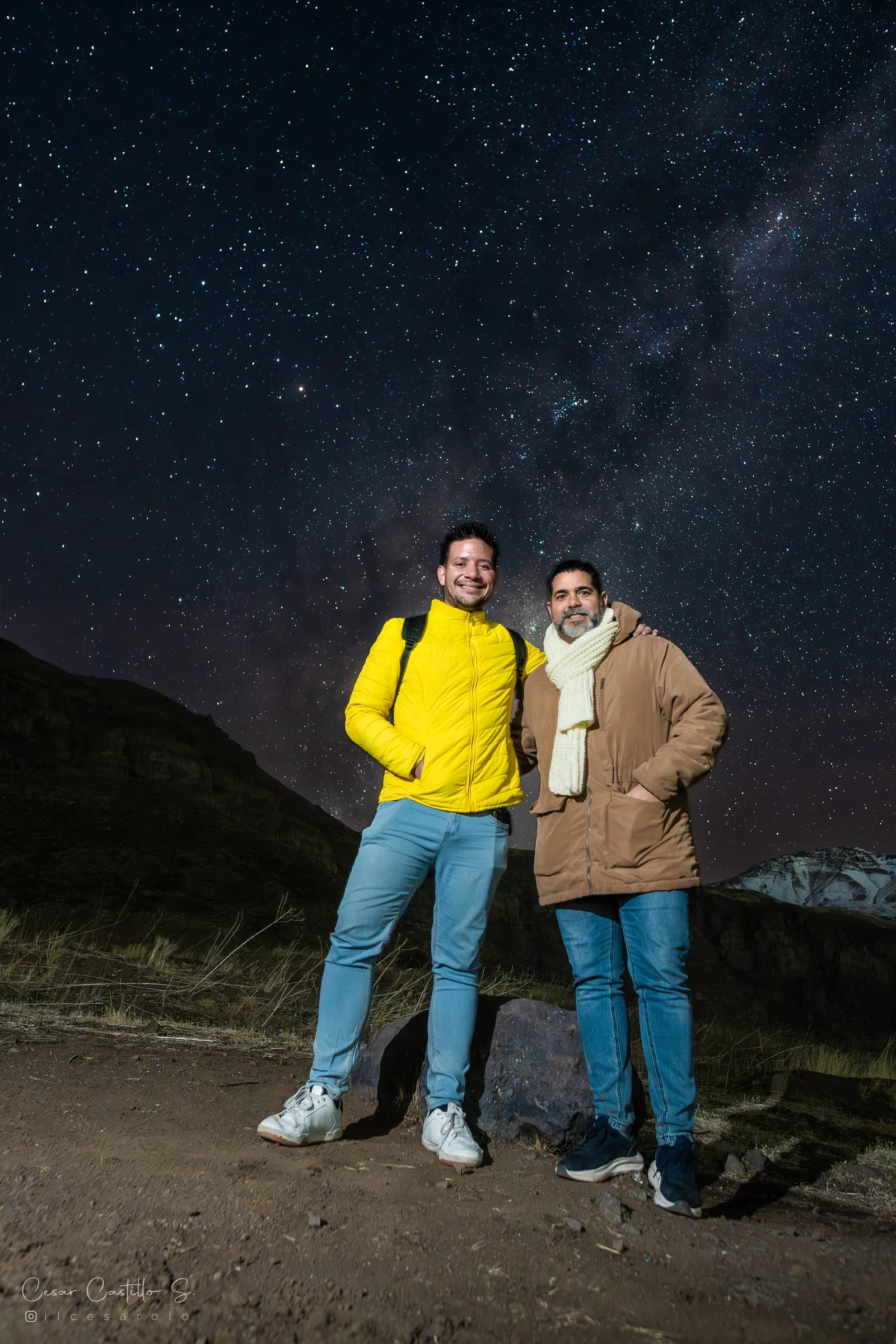 An astrophotography portrait under the Milky Way in Cajón del Maipo.
Modern phones have a night mode and can capture the Milky Way if you rest them on something steady and leave a long exposure. For a portrait with the stars behind you, a camera on a tripod and someone who knows how to frame the shot work best: on a good stargazing tour, the team takes those photos for you.
Our experience: stars and wine at an observatory in Cajón del Maipo
On Stargazing and Wine at an Andes Observatory in Cajón del Maipo we pick you up at your hotel in Santiago at dusk and drive up to an observatory in the Andes foothills. There you get:
- An astronomy talk and a naked-eye tour of the sky with specialised guides.
- Observation through professional telescopes of planets, clusters and nebulae.
- A visit to the observatory and its exhibition of real meteorites.
- An astrophotography session, with professional photos for free and tips for night photos with your phone.
- A sharing board with cheese, salami and nuts, with wine and juices, and blankets for the cold.
It lasts about five hours, is for ages 10 and up and depends on a clear sky: with rain or clouds we reschedule or refund in full. The departure time follows sunset and changes with the month.
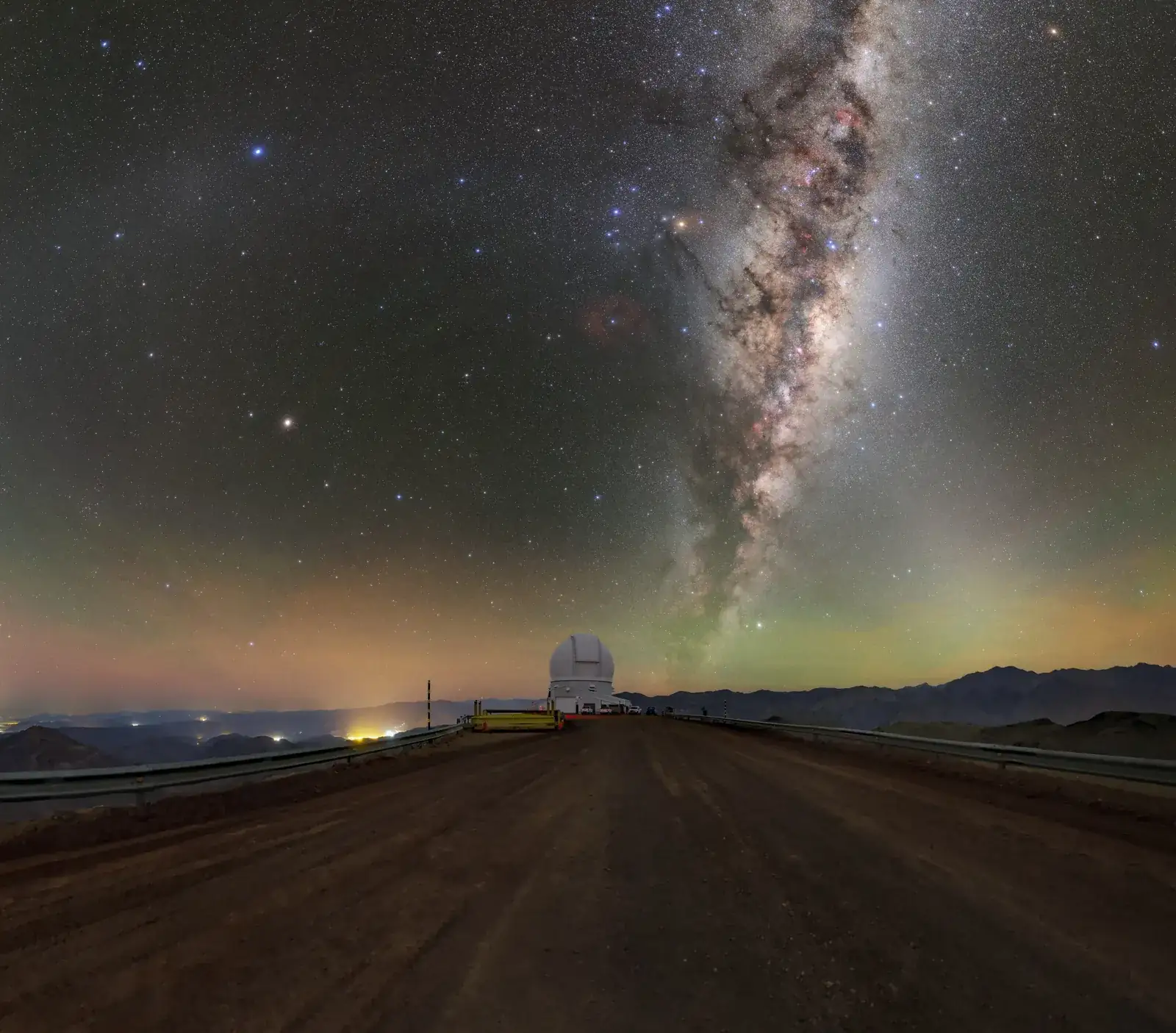 Chile’s sky, one of the clearest on the planet.
Pair it with a day trip
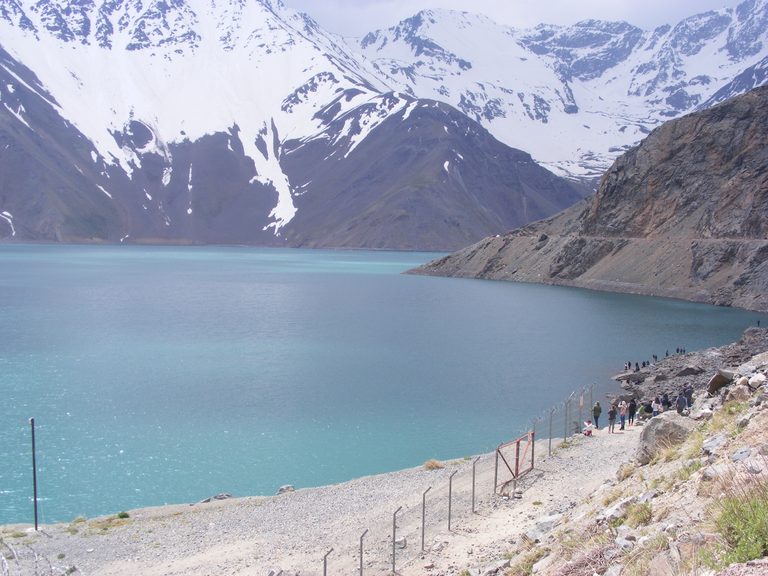
Cajón del Maipo is also a great day out: rivers, mountains and the turquoise El Yeso reservoir. See it on our Andean picnic at El Yeso and come back another night for the stars. More ideas in our guide to day trips from Santiago.
FAQ
Can you see stars in Santiago? Very few: the city’s light pollution washes them out. To see the Milky Way you need to get away from the lights, as in Cajón del Maipo.
Do I need to know about astronomy? No. The guides explain everything from scratch and the telescopes are already pointed.
Is it good for children? Yes, from age 10. Kids love the planets and the meteorites.
What if it is cloudy? We reschedule or refund you 100%.
Tours related to this article
Want to see it with a local guide?
Book a tour online or ask us anything on WhatsApp.